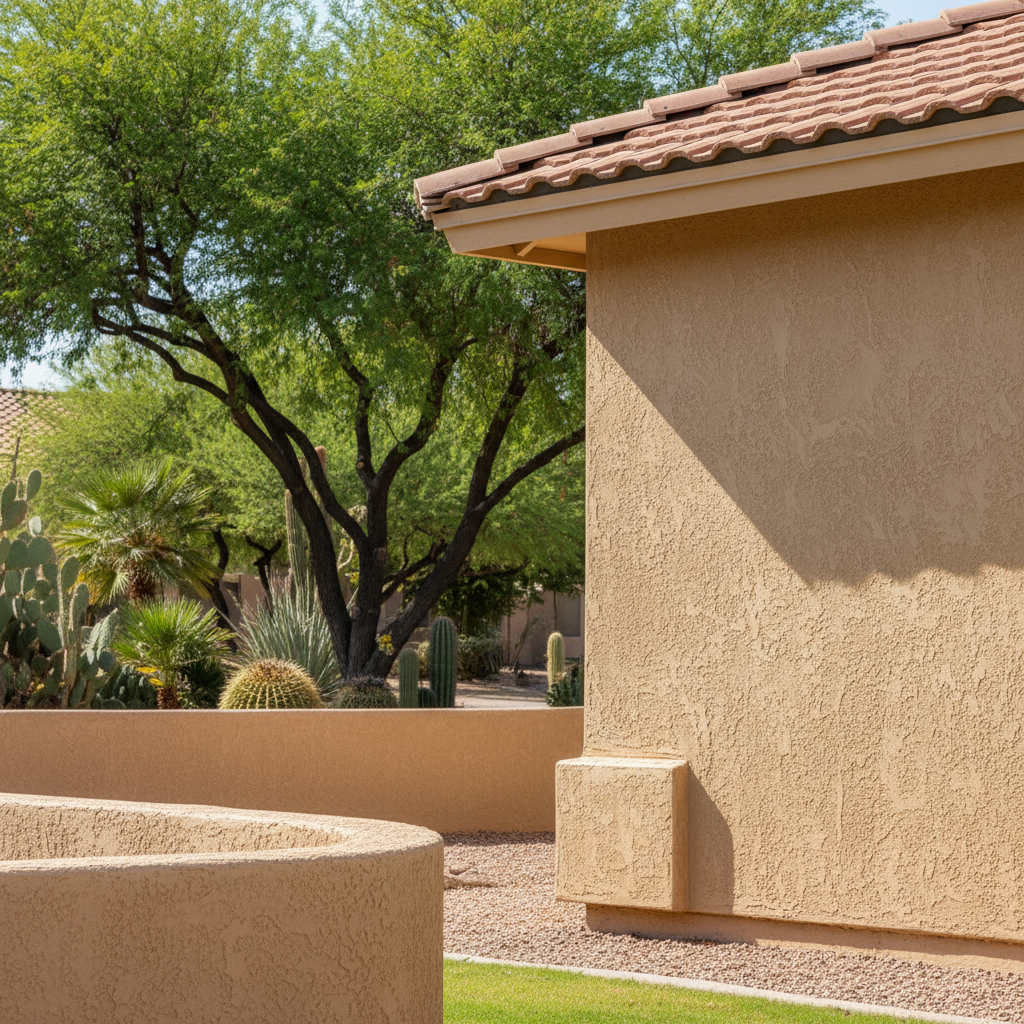
You've got stucco on your home here in Surprise, and you want it to look good and protect your investment for years. That's smart thinking. I've been working with stucco in this valley for a long time, and I can tell you, a little bit of care goes a long way. It's not a set-it-and-forget-it kind of thing, especially with our Arizona sun beating down.
Extending Your Stucco's Lifespan
So, how do you make sure your stucco lasts as long as it possibly can? It really comes down to a few key things. First, keep it clean. Our dust storms, even the smaller ones, can leave a film that traps moisture and dirt. A gentle rinse with a garden hose once or twice a year is usually enough. If you've got stubborn dirt or mildew, a soft brush and a mild detergent solution (like dish soap and water) will do the trick. Just make sure you rinse thoroughly afterwards so you don't leave any residue.
Another big one is managing water. Stucco is tough, but constant moisture is its enemy. Make sure your sprinklers aren't constantly hitting the side of your house. I see this all the time, especially in developments like Marley Park where landscaping is often right up against the foundation. Redirect those sprinkler heads! Also, check your gutters and downspouts. They need to be clear and direct water away from your foundation. If water pools around the base of your stucco, it's going to cause problems eventually.
Finally, consider a good quality elastomeric paint every 10-15 years. This isn't just about color; it adds another layer of protection against the elements, especially our intense UV rays and the occasional monsoon downpour. It helps seal hairline cracks and keeps moisture out, effectively extending the life of your stucco finish.
Regular Maintenance: What You Should Be Doing
Beyond the occasional wash, there are a few things you should be checking regularly. I'd say at least twice a year, maybe once in the spring and again after monsoon season, take a walk around your house. Look closely at the stucco for any changes.
- Check for cracks: Hairline cracks are normal as your house settles and expands/contracts with our temperature swings. But if you see cracks wider than a credit card, or if they're forming a spiderweb pattern, that's a red flag.
- Look for discoloration: Dark streaks, especially under windows or near the roofline, often mean water is getting in somewhere. Green or black spots could be mildew or algae, which means constant moisture.
- Inspect around openings: Pay extra attention to where your stucco meets windows, doors, and utility penetrations (like hose bibs or dryer vents). The caulk or sealant here is your first line of defense against water intrusion. If it's cracked, peeling, or missing, it needs to be replaced.
- Check the weep screed: This is the metal flashing at the very bottom of your stucco wall, usually just above the foundation. It's designed to let any trapped moisture escape. Make sure it's not buried by landscaping, dirt, or paint. It needs to be clear and visible.
Warning Signs of Bigger Problems
While regular checks can catch small issues, some signs scream